
What Information Can Be Collected With LiDAR Mapping?
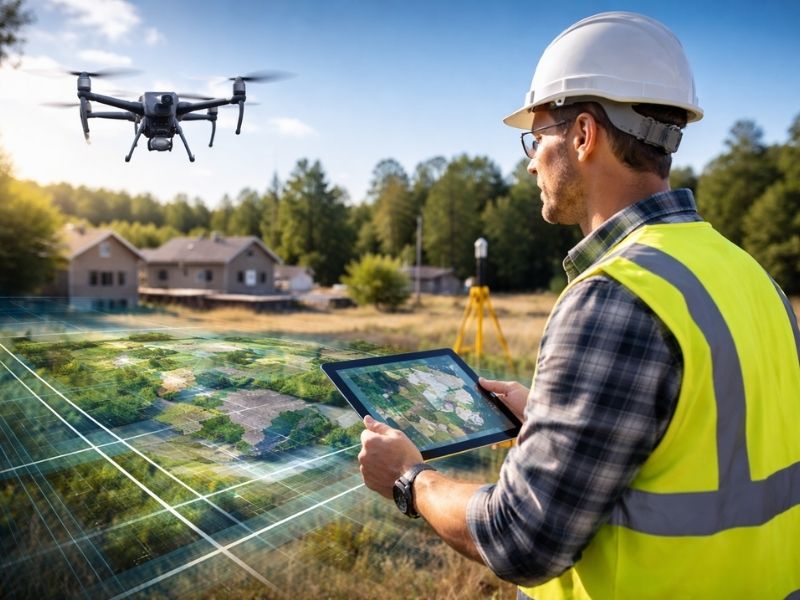
LiDAR mapping collects detailed data about land and structures. Most people don’t know how much useful information comes out of it. Developers and engineers use LiDAR mapping to measure land, map buildings and study vegetation. This article explains what gets collected, how it works and why it matters for real projects.
What LiDAR Mapping Measures on the Ground
LiDAR fires laser pulses at the ground. The pulses bounce back and record the exact height of each point. Thousands of these measurements happen every second. Software then removes returns from trees and buildings, leaving only ground-level data.
What’s left is called a Digital Elevation Model, or DEM. It shows the exact shape of the land, including hills, slopes, flat areas and low spots where water collects.
Engineers use DEMs to plan grading and drainage before construction starts. A site may look flat to the eye but still have height changes that affect how water drains, where a foundation sits and how much earthwork a project needs.
What LiDAR Captures Above the Ground
LiDAR also records everything above the ground. Trees, buildings, fences and power lines all get captured in the same scan. This full-surface picture is called a Digital Surface Model, or DSM.
The DSM shows the site exactly as it looks right now, not just the bare ground. Planners use it to study shadows, check sight lines and understand how above-ground features affect a design.
If you subtract the DEM from the DSM, you get the height of everything sitting above the ground. That includes tree canopy heights across the entire site. Tree surveys, habitat studies and urban planning projects all use this data regularly.
How LiDAR Measures Buildings and Structures
LiDAR records the full shape of buildings in three dimensions. Rooflines, wall faces, overhangs and even small architectural details get captured accurately in a single scan.
This saves a lot of time on projects that need building measurements. A field crew doesn’t have to measure by hand. The LiDAR scan delivers a 3D model that designers and engineers can open and use in their software right away.
For roads, bridges and other infrastructure, LiDAR captures wall heights, clearances, road geometry and structural details across long distances. A single drive or flight pass collects all of it at once.
How LiDAR Sorts Vegetation Into Layers
LiDAR records several bounces from a single laser pulse. The first bounce hits the top of a tree. The next bounces hit lower branches. The last bounces reach the ground below the canopy.
This layered return data gets sorted into categories: tall trees, mid-level growth, low shrubs and bare ground. Each layer becomes its own data set that can be viewed and analyzed separately.
Developers use vegetation layers to find trees large enough to require removal permits. Environmental teams use it to map what plant types cover large areas without walking every acre. Site planners use it to estimate clearing costs before a project goes to bid.
What LiDAR Cannot See Underground
LiDAR does not see underground. The laser pulses only hit surfaces they can physically reach. Buried pipes, cables and tanks do not show up in LiDAR data at all.
Above ground, LiDAR does capture utility poles, overhead lines, surface-mounted equipment and access covers that are visible from the air or from a vehicle. That surface data, combined with utility records, helps engineers plan around existing infrastructure more accurately.
For road and pipeline corridor projects, a mobile LiDAR unit drives the route and captures the full geometry of the right-of-way in a single pass. The data feeds directly into design software with no manual entry needed.
How LiDAR Records Different Surface Types
Every laser bounce records how much light came back to the sensor. Hard surfaces like concrete and asphalt reflect more light. Soft surfaces like bare soil and grass reflect less. Each surface has its own signature in the data.
Engineers use this reflectivity data to identify what type of surface covers each part of a site. It helps separate paved areas from dirt, buildings from trees and dry ground from wet areas.
Water is especially easy to spot. It reflects very little light back to the sensor, so ponds, drainage channels, puddles and shorelines stand out clearly in the data.
How LiDAR Supports Flood Zone Analysis
LiDAR terrain data is one of the main inputs for flood modeling. Engineers load the DEM into hydraulic modeling software to predict how water moves across a site during heavy rain or a major storm event.
FEMA uses LiDAR data to update Flood Insurance Rate Maps across the country. When a community requests a map revision, LiDAR-derived terrain data is usually the foundation of the updated elevation data.
For development projects near flood zones, LiDAR helps engineers design drainage systems, confirm finished floor elevations and build the technical support needed for permit applications that require hydraulic analysis.
Numbers and Standards Developers Should Know
LiDAR systems can record up to 15 or more laser bounces per pulse. That allows detailed sorting of vegetation and accurate ground detection beneath dense tree cover.
The USGS 3D Elevation Program has collected LiDAR data covering more than 80 percent of the contiguous United States. That data is free to access and widely used for planning and engineering work.
Standard LiDAR mapping collects two to eight data points per square meter. Detailed structural scans can exceed 100 points per square meter.
FEMA flood work requires elevation data referenced to NAVD 88. LiDAR collections for flood zone projects must meet that standard.
Mobile LiDAR units collect data at highway speeds. A single drive can cover many miles of road corridor in one day.
Frequently Asked Questions
What information can be collected with LiDAR mapping?
LiDAR mapping collects ground elevation, building shapes, tree heights, surface types and flood zone terrain data. It also records vegetation layers, structural measurements and surface reflectivity. What you get depends on the system used and how the data is processed after the scan.
Can LiDAR see underground utilities?
No. LiDAR only reaches surfaces it can physically hit. Buried pipes, cables and tanks do not show up. Above-ground items like poles, overhead lines and surface covers can be captured. Mapping what’s underground requires different tools such as ground-penetrating radar.
How accurate is LiDAR data?
Airborne LiDAR is typically accurate to 10 to 15 centimeters vertically in open terrain. Ground-based and mobile systems can reach accuracy under one centimeter. Accuracy depends on the equipment, the collection method and whether ground control points were used to verify the data.
What is the difference between a DEM and a DSM?
A DEM shows bare ground after trees and buildings are removed from the data. A DSM shows everything the laser hit, including rooftops and tree canopy. The difference between the two tells you how tall above-ground features are across the site.
How does LiDAR help with flood zones?
LiDAR terrain data feeds into flood models that show how water moves across land during storm events. Engineers use it to design drainage systems, set finished floor elevations and support permit applications for projects near mapped flood zones.